Bad Parenting 1: Mr Red Face
- 3.9
- Rating
- 500.00K
- Installs
- Free
- Price
 Analysis by App-foxy
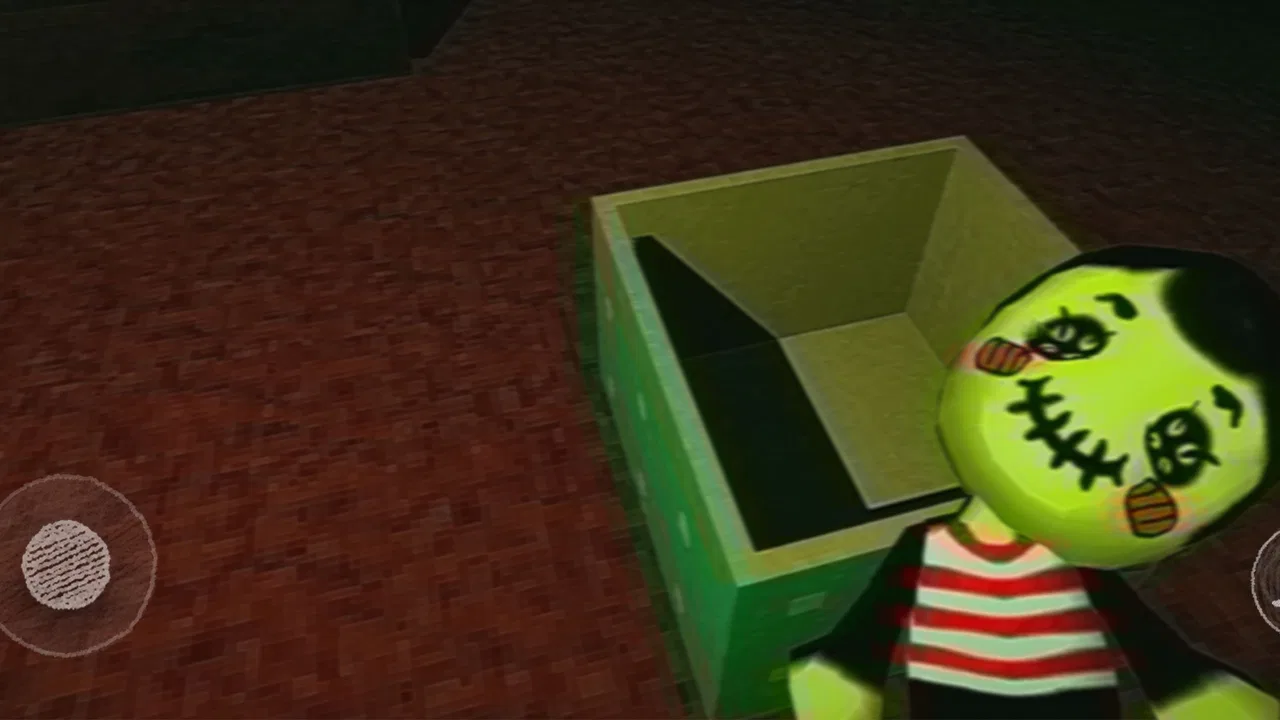
Bad Parenting 1: Mr Red Face is a short, unsettling role-playing game built around a simple question: how far would you go to protect your family when the truth is deliberately kept out of reach? I found its strongest quality in the way it turns an ordinary-looking family situation into something increasingly uncomfortable. It is not a cheerful adventure, a combat-heavy quest, or a traditional character-building RPG. Instead, RoyalSoftworks uses exploration, observation, and suspicion to create a tense story about Mr. Red Face and the danger surrounding him.
That focus gives the game a clear identity. The store summary talks about protecting your family and uncovering the truth, and that is exactly the lens through which I approached it. The experience works best when I paid attention to small details rather than rushing from one objective to the next. If you enjoy narrative games where the mood matters as much as the action, this free title is worth examining. If you want deep battles, extensive equipment systems, or a large open world, you may find it too narrow.
Why the mystery works better than the role-playing label suggests
Calling this a role-playing game may create expectations that do not quite match the experience. I would describe it more accurately as a story-led mystery with role-playing elements. The central appeal is not building a powerful hero; it is inhabiting a situation where your attention and judgment matter. The family at the center of the story gives every discovery a personal weight, while Mr. Red Face provides a memorable source of unease without needing a complicated premise.
You May Also Like

 Blood Strike: 2.5 Anniversary
Blood Strike’s Loadouts Turn Every Drop Into a Tactical Gamble
A close look at Blood Strike’s custom loadouts: how fast access to signature weapons reshapes its battle royale rhythm, rewards preparation, and narrows the gap between fights.

 Pandora - Music & Podcasts
Pandora’s Music Is Easy to Start, but Harder to Recover
Pandora’s strength is its low-effort path from a seed to a station. Its weak spot is how much confidence it asks you to place in connection, setup, and quiet recovery.

 8 Ball Pool
 Is Built on Rivalries, Rematches, and Routine
A close look at the rivalries, rematches, shared routines, and unanswered safety questions that turn a quick pool match into a persistent mobile community.

 Samsung Music
’s Quiet Strength Is Playing What You Already Own
Its reach comes less from spectacle than from dependable access to a personal library. That simplicity is both the app’s strongest retention engine and its ceiling.

 AccuWeather: Weather Radar
AccuWeather Review: A Quick, Clear Forecast for Everyday Decisions
For everyday plans, the best forecast is the one you can understand quickly. AccuWeather makes rain timing, radar, and local conditions easy to act on, with a few trade-offs.

 Hill Climb Racing
Why Hill Climb Racing Still Turns Crashes Into One More Run
A tiny car, a bumpy hill and one more upgrade: Hill Climb Racing keeps resurfacing because its simple chaos makes every near-miss feel personal.
More From Our News Desk
View All News


The game’s best scenes rely on contrast. Familiar domestic surroundings can feel safe for a moment, then a strange detail changes how I interpret everything around it. That approach makes exploration meaningful. I was not simply moving through spaces to reach the next marker. I was checking what had changed, considering whether an apparently harmless object mattered, and wondering whether the game wanted me to trust what I was seeing.
The real strength is its use of uncertainty as gameplay. Instead of explaining every part of the mystery immediately, it encourages the player to form theories and revise them. This makes even simple movement feel purposeful. A player who reads carefully and watches the environment will get more from it than someone who treats every scene as a corridor between story moments.
That also explains why the game can feel more intense than its basic premise suggests. The threat is not interesting only because of what it does; it is interesting because I was never completely sure how close it was or what the family understood. The tension grows through questions: who is hiding something, what is being ignored, and whether protecting someone might require making an uncomfortable choice.
Exploration rewards patience, not speed
My first useful tip is to avoid rushing through familiar-looking areas. In many games, once a room appears ordinary, I move on immediately. Here, that habit can weaken the experience. I found it more rewarding to pause, inspect the surroundings, and revisit places after a story development. The game’s mystery depends on context, so a detail that seems meaningless early on may feel important later.
I also recommend playing with a note-taking mindset, even if you never write anything down. Keep track of names, unusual behavior, and details that do not fit together. This is not because the game requires a formal puzzle notebook, but because remembering the emotional and factual changes between scenes helps the story land properly. It is a small adjustment that makes the investigation feel more personal and less like a sequence of disconnected events.
Another useful approach is to resist treating every strange moment as an answer. The game benefits from ambiguity, and not every unsettling image or conversation needs to be decoded instantly. I enjoyed it more when I allowed some uncertainty to remain while looking for patterns. Players who demand immediate explanations may be frustrated, while players who enjoy building a theory from incomplete evidence will probably appreciate the pacing.
A family-centered story with an uncomfortable edge
The family theme gives the game more emotional direction than a standard horror mystery. The objective is not simply to escape danger or defeat a villain. Protection is part of the motivation, which creates a more complicated relationship with the investigation. Sometimes learning the truth can make a situation worse before it makes anything clearer. That tension gives the player a reason to continue beyond curiosity.
Mr. Red Face is effective because he feels like the center of a problem that is larger than a single frightening appearance. The title character becomes a question as much as a threat. I kept wondering whether the important issue was his identity, his influence, or the way other people responded to him. That uncertainty supports the game’s darker tone and prevents the story from feeling like a straightforward chase.
The Teen content rating is important here. I would not recommend treating this as a harmless family game simply because its story involves a household. Its subject matter and unsettling atmosphere are aimed at older players, and younger children may find the themes or presentation uncomfortable. Parents looking for something suitable to play with a child should choose a clearly family-oriented title instead.
Where the game creates friction
The biggest limitation is that the experience depends heavily on atmosphere and interpretation. When the mood works, a quiet moment can be more effective than a dramatic confrontation. When it does not, the same moment may feel slow or unclear. I occasionally wanted a stronger indication of what the game expected me to notice, especially when several details seemed equally suspicious.
This is a meaningful trade-off rather than an accidental flaw. Giving the player too much guidance would make the investigation feel artificial, but giving too little can turn curiosity into confusion. Bad Parenting 1: Mr Red Face sometimes lands on the less comfortable side of that balance. I recommend it to people who are willing to sit with uncertainty, not to anyone who needs constant direction.
The role-playing label may also disappoint players who expect customization or progression. The appeal is story discovery, not assembling an elaborate build. I would not choose it as a replacement for a traditional RPG with combat, party management, or long-term character development. Those systems are not the reason to play this game, and expecting them could make the experience seem thinner than it really is.
There is also a practical pacing issue. Because the game asks me to notice details and absorb the mood, it is better suited to a focused session than to distracted play. Playing while switching between messages or other apps would weaken the tension and make the clues harder to connect. A quiet evening is a better setting than a crowded commute, even though the game itself is free and accessible.
Who should play it, and who should skip it
I think the best audience is anyone who enjoys compact narrative mysteries, unsettling family stories, and games that trust the player to interpret events. It is particularly suitable for players who like examining environments, questioning apparently normal behavior, and discussing possible explanations afterward. The game’s central hook is strong enough to carry the experience even when the mechanics remain deliberately restrained.
It is also a good choice for someone who wants to try a darker story without committing to a huge role-playing adventure. Since the price is free, there is little barrier to testing whether its style suits you. I would still approach it with the right expectations: free does not mean casual, and the Teen rating signals that the tone is not designed for every player.
On the other hand, I would skip it if your priority is fast action. Players who want frequent battles, a large map, detailed character statistics, or a long list of unlockable abilities will probably be better served by a conventional role-playing game. I would also avoid it if ambiguous storytelling irritates you. The mystery asks for patience, and the satisfaction comes from noticing relationships between details rather than receiving constant confirmation.
For a realistic everyday scenario, imagine finishing work or school and having a short period when you want something more absorbing than a casual puzzle but less demanding than a large adventure. This is where the game fits well. I could play with headphones, focus on the family’s situation, and stop after a meaningful story beat without needing to remember a complicated control system. The same session would be less enjoyable if I were playing in a noisy room or trying to follow the story while multitasking.
How it compares with familiar alternatives
Compared with a conventional role-playing game, this title exchanges breadth for tension. You get a more concentrated mystery instead of a broad world filled with optional activities. That makes it easier to enter and easier to understand, but it also means there is less room for experimentation outside the central story. I see it as a focused narrative experience rather than a complete substitute for a long-form RPG.
Compared with a typical horror game, its family-centered premise gives the fear a different shape. The concern is not only personal survival. The player is also trying to understand how other people are affected and what responsibility comes with uncovering the truth. That makes the story more intimate than a simple monster escape scenario.
Compared with a casual mystery game, it is more dependent on tone. A casual title may guide the player clearly from clue to clue, while this one benefits from uncertainty and discomfort. If you want a relaxing investigation, choose something lighter. If you want a game that makes ordinary situations feel suspicious, this is the stronger match.
Platform details and what to expect from the current release
RoyalSoftworks lists the game as free, which makes it easy to recommend as a low-risk experiment for Android players. It runs on Android 7.0 or newer, so it is not limited only to recent devices. The current release is version 1.0, and I would keep that in mind when setting expectations: the experience should be judged as a focused release rather than as a constantly expanding service.
The game has reached over 500 thousand installs and holds a 3.9 average from around 2.8 thousand ratings. Those figures suggest that it has attracted a noticeable audience while also receiving a mixed response. I think that combination makes sense. Its concept is distinctive, but its reliance on atmosphere, interpretation, and restrained role-playing mechanics will not suit everyone.
The store page also shows around 101 written reviews, which is enough to indicate active player discussion without making the title feel universally agreed upon. I would pay more attention to comments about pacing, clarity, and tone than to simple praise or criticism. Those are the areas most likely to determine whether the experience works for you personally.
My verdict after weighing the mystery against its limits
Bad Parenting 1: Mr Red Face succeeds because it understands that a disturbing story does not need constant action. Its family-focused mystery, uneasy atmosphere, and emphasis on observation give it a recognizable personality. I liked that the game made me question ordinary details and think about protection as a difficult responsibility rather than a simple heroic goal.
Its weaknesses are equally clear. The story can feel vague when I want firmer direction, and the role-playing category may set expectations for systems the game does not emphasize. It is not the right recommendation for action fans, traditional RPG enthusiasts, young children, or players who dislike unresolved tension.
For the right audience, though, the free price makes the decision easy. Try it when you can give the story your full attention, examine the environment patiently, and accept that the mystery may ask you to interpret rather than simply receive answers. I recommend it to mature players who prefer a personal, unsettling investigation over a large adventure. It is a focused game with a clear creative idea, and despite its rough edges, that idea stays with me longer than many more elaborate role-playing releases.
FAQs for Bad Parenting 1: Mr Red Face
01What is the main objective of Bad Parenting 1: Mr Red Face?
In Bad Parenting 1: Mr Red Face, players navigate through humorous scenarios where they must solve puzzles and make decisions to progress. The goal is to help Mr. Red Face manage parenting mishaps and chaotic situations, providing an entertaining and light-hearted gaming experience.
02Is Bad Parenting 1: Mr Red Face suitable for all ages?
The game is designed for a mature audience due to its comedic take on parenting and some suggestive humor. It’s recommended for players aged 12 and above. Parents should review the content to ensure it aligns with their family’s values before allowing younger children to play.
03What platforms is Bad Parenting 1: Mr Red Face available on?
Bad Parenting 1: Mr Red Face is available for both Android and iOS devices. Users can download the game from the Google Play Store or the Apple App Store, ensuring compatibility with most smartphones and tablets for a seamless experience.
04Does Bad Parenting 1: Mr Red Face require an internet connection to play?
The game can be played offline, making it convenient for users without constant internet access. However, some features may require an internet connection, such as in-app purchases or accessing leaderboards, enhancing the overall gaming experience.
05Are there in-app purchases in Bad Parenting 1: Mr Red Face?
Yes, the game includes in-app purchases that allow players to enhance their experience, such as unlocking additional levels or purchasing unique items. While not necessary to complete the game, these options provide added content and customization for those interested.
Pros
- Engaging storyline with unexpected twists.
- High-quality graphics and animations.
- Intuitive controls suitable for all ages.
- Challenging puzzles that test your wit.
- Regular updates with new content.
Cons
- Occasional in-app purchase prompts.
- Some levels may feel repetitive.
- Requires stable internet connection.
- Ads can interrupt gameplay experience.
- Limited offline functionality.

Bad Parenting 1: Mr Red Face
Gallery